

Citizenship
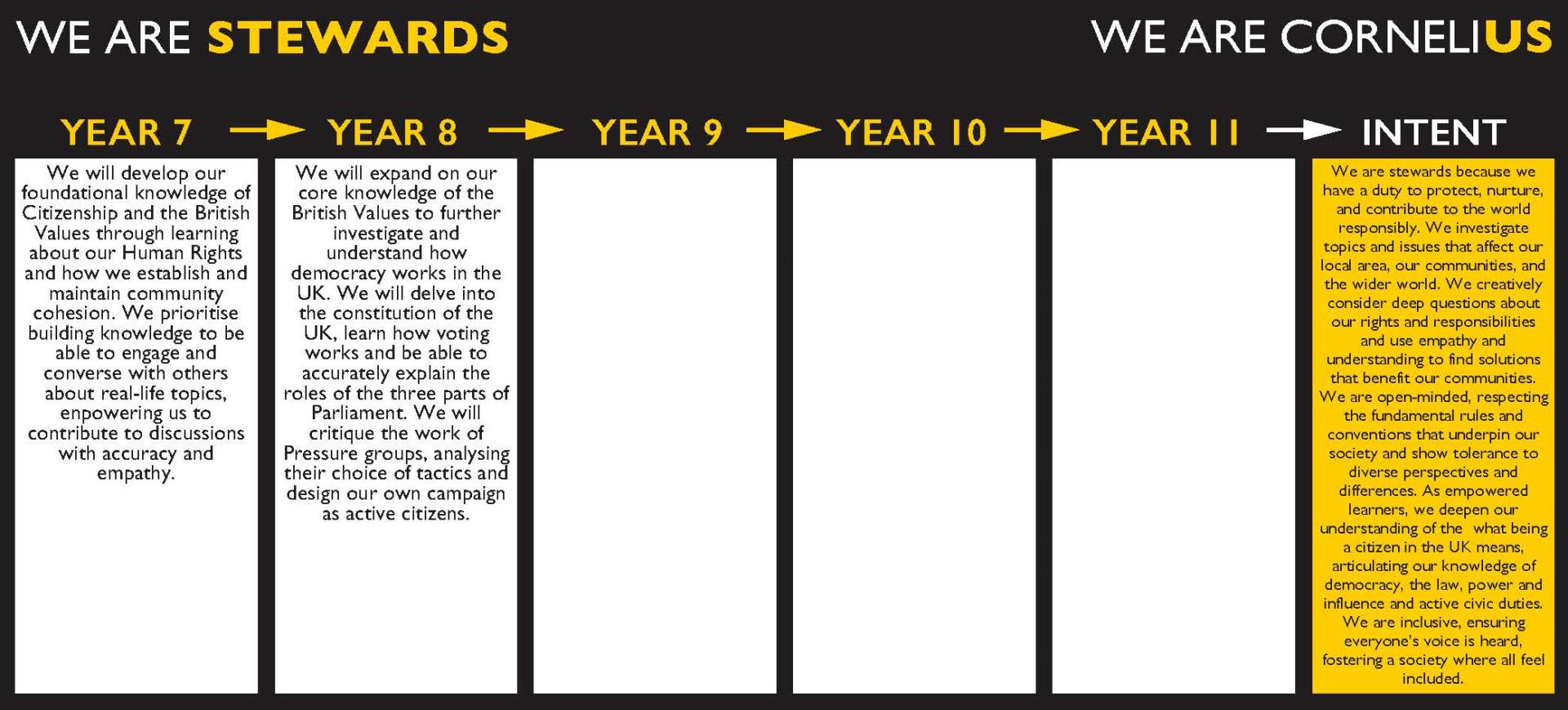
Intent
Career Opportunities in Citizenship
The study of Citizenship helps students become informed, active, and responsible members of society. It develops a strong understanding of democracy, law, human rights, and social justice, alongside valuable skills such as debating, critical thinking, teamwork, and communication. These transferable skills make Citizenship an excellent foundation for careers in law, politics, civil service, journalism, education, public policy, international relations, and social work.
Citizenship also supports pathways into roles that involve working with people and communities, such as policing, youth work, charity and voluntary sector roles, and community development. Employers and universities value the subject for its focus on active participation, ethical decision-making, and understanding of current affairs—essential attributes for a wide range of professional environments.
Year 7 Curriculum plans
| Term | What are we learning? | What Knowledge, Understanding and Skills will we gain? | What will excellence look like? | How will these be assessed? |
|
Autumn |
What are the British Values?
|
You will learn about the five British Values – Democracy, Rule of Law, Religious Tolerance, Mutual Respect and Individual Liberties – and be able to define and explain each of them accurately. You will learn how the British Values underpin and enhance our society to help build a common sense of belonging for all people living in the UK. You will understand how the values ensure all people in the UK feel included and respected, and how these shared values contribute to community cohesion. You will learn how the values help us engage with all people in society to create a fairer, kinder society and ensure we celebrate our similarities more than our differences. You will understand other people’s perspectives, the law relating to individual expression and equality, and how to communicate our different points of view with clarity, truthfulness and sensitivity. You will develop your communication skills, your debating and evaluation skills. You will employ your source analysis skills, your interpretation skills, your empathy, your critical thinking and critiquing skills to explain your new learning and express your answers to challenging questions. You will further develop your extended writing skills using the Citizenship essay structure to demonstrate your learning. | You will be motivated in class and determined to deepen your knowledge and understanding. You will be focused and keen to discuss your responses with your table partner and the class. Your book will be neat, the date and title will be underlined, with care taken when completing all tasks. You will complete the learning activities with dedication and accuracy, striving to complete the extension and challenge tasks. You will understand the key terms we learn and how to use them effectively in sentences. You will confidently recite the five British Values and be able to explain their relevance in our society. You will be able to recognise and dispel misinformation and misunderstandings. You will be able to discuss examples and form opinions, whilst accepting other people’s viewpoints, which may be based on culture, religion or politics and actively listen and participate in debates. You will be able to compose thoughtful two-sided responses to statements, having considered other people’s opinions, and conclude with your own point of view using facts and truths to justify your answers. You will be able to apply your learning to the wider world. | Instant feedback MCQ Questioning Written work in the lesson Whole Class Feedback Formative assessment |
|
Spring |
What are Human Rights?
|
You will learn about the four main documents that support and protect our Human Rights – UDHR, ECHR, CRC and the Human Rights Act 1998. You will be able to recall their names, where they originated and explain their legal powers accurately. You will learn how Human Rights underpin and enhance our society to ensure safety and fairness for all, the context in which they were created and what they aimed to achieve. You will explore the history of Human Rights, from the Cyrus Cylinder through to Magna Carta, and up to our most recent Acts of Parliament. You will learn how Human Rights are universal, unalienable, and how they help to maintain an equitable, kinder and more just society. You will be able to argue whether the UDHR is still relevant and whether it has any powers in the modern world. You will learn why the CRC has to exist to further protect children. You will develop your communication skills, your debating and evaluation skills. You will employ your source analysis skills, your interpretation skills, your critical thinking and critiquing skills to explain your new learning and express your answers to challenging questions. You will further develop your extended writing skills using the Citizenship essay structure to demonstrate your learning. | You will be motivated in class and determined to deepen your knowledge and understanding. You will be focused and keen to discuss your responses with your table partner and the class. Your book will be neat, the date and title will be underlined, with care taken when completing all tasks. You will complete the learning activities with dedication and accuracy, striving to complete the extension and challenge tasks. You will understand the key terms we learn and how to use them effectively in sentences. You will confidently recite the four Human Rights documents and be able to explain their relevance in our society. You will be able to recognise and dispel misinformation and misunderstandings. You will be able to discuss examples, scenarios and form opinions based on knowledge and facts and actively listen and participate in debates. You will be able to compose thoughtful two-sided responses to statements, having considered other people’s opinions, and conclude with your own point of view using facts and truths to justify your answers. You will be able to apply your learning to the wider world. | Instant feedback MCQ Questioning Written work in the lesson Whole Class Feedback Formative assessment |
|
Summer |
Why is Community Cohesion important?
|
You will learn about the political and cultural background of the UK, that we are a multicultural, multifaith union of countries (England, Northern Ireland, Scotland and Wales) each with their own distinct cultures but with shared traditions and histories. You will understand how the UK has made all different types of people welcome through learning about circumstances of migration and the value that has been added by diversity, such as creativity, food and music. You will learn about our heritage, culture and religious celebrations and how by showing acceptance and respect we can build cohesion and a stronger sense of community. You will learn that we have more in common than divides us, how we celebrate Britishness and what brings multiple identities together. You will learn how to identify and challenge divisive behaviours through empathy and learning about other communities. You will develop your communication skills. You will employ your investigating and inquiry skills to reach balanced conclusions using empathy to consider other points of view. You will participate in debates, interpreting sources and scenarios through your analytical skills, whilst using your critical thinking skills to challenge and refute incorrect stereotypes. You will reflect on your own thoughts and compose extended writing pieces to demonstrate your knowledge using the Citizenship essay structure. You will evaluate and critique methods to improve cohesion in the UK. | You will complete the learning activities with dedication and accuracy, striving to complete the extension and challenge tasks. You will understand the key terms we learn and how to use them effectively in sentences. You will be able to recognise and dispel misinformation and misunderstandings and compose thoughtful responses using more than one point of view to reach your own conclusion. You will be able to apply your learning to the wider world. You will confidently recite key knowledge, such as what makes the UK such a welcoming country. You will actively listen to more than one point of view and participate in debates to discuss opinions with sensitivity and understanding, whilst also being able to devise a two-sided response having considered other people’s opinions. | Instant feedback MCQ Questioning Written work in the lesson Whole Class Feedback Formative assessment |







Year 8 Curriculum plans
| Term | What are we learning? | What Knowledge, Understanding and Skills will we gain? | What will excellence look like? | How will these be assessed? |
|
Autumn |
How does democracy work in the UK?
|
You will learn the key information about how democracy works in the UK at both a local level (MPs and councillors) and at a national level (Government and Parliament). You will understand the history of democracy from Ancient Greece, through the first parliament of Simon De Montfort up to today’s bicameral system. You will understand the roles of the House of Commons and the House of Lords and be able to explain which House has the most power. You will understand who can vote and who can’t, how we vote, and how candidates and political parties persuade us to elect them through campaigning, manifestos and hustings. You will understand the difference between Representative Democracy and Direct Democracy and how our voting system – First Past the Post – works. You will develop your communication skills. You will build on your debating skills, your interpretation and analysis skills to reach conclusions about sources and scenarios. You will employ new knowledge to compose extended writing pieces to convince others of your opinions using logic and facts to justify your points within the Citizenship essay structure. You will use empathy and respect throughout your responses, both spoken and written. | You will be motivated in class and determined to deepen your knowledge and understanding. You will be focused and keen to discuss your responses with your table partner and the class. Your book will be neat, the date and title will be underlined, with care taken when completing all tasks. You will complete the learning activities with dedication and accuracy, striving to complete the extension and challenge tasks. You will understand the key terms we learn and how to use them effectively in sentences. You will accurately be able to recall the key information about how democracy works in the UK. You will be able to articulate your thoughts using subject-specific language and write extended answers showing two opposing points of view with your own opinion as a conclusion. You will be able to explain how your learning in the classroom links to the wider world and your life in the future. | Instant feedback MCQ Questioning Written work in the lesson Whole Class Feedback Formative assessment |
|
Spring |
What is Digital Literacy?
|
You will learn about how our world is shaped by the media, both for the better and for the worse. You will learn how our understanding of local, national and world issues are influenced due to reporting styles based on who owns the media, motivation of the reporter and the political leanings of the media outlet. You will understand how to spot fake news, how it uses misinformation, disinformation and censorship to further particular points of view, often extremist or populist. You will learn the importance of an unbiased media, the role of public service broadcasters and why there's been a decline in traditional media (newspapers). You will create your own propaganda piece to demonstrate how our opinions can be manipulated. You will build on your debating skills, your interpretation and analysis skills to reach conclusions about sources and scenarios. You will employ new knowledge to create political propaganda and compose extended writing pieces to convince others of your opinions using logic and facts to justify your points within the Citizenship essay structure. You will use empathy and respect throughout your responses, both spoken and written. | You will be motivated in class and determined to deepen your knowledge and understanding. You will be focused and keen to discuss your responses with your table partner and the class. Your book will be neat, the date and title will be underlined, with care taken when completing all tasks. You will complete the learning activities with dedication and accuracy, striving to complete the extension and challenge tasks. You will understand the key terms we learn and how to use them effectively in sentences. You will be able to recognise and dispel misinformation, disinformation and misunderstandings and confidently identify fake news. You will be able to articulate your thoughts using subject-specific language and write extended answers showing two opposing points of view with your own opinion as a conclusion. You will be able to explain how your learning in the classroom links to the wider world and your life in the future. | Instant feedback MCQ Questioning Written work in the lesson Whole Class Feedback Formative assessment |
|
Summer |
What are Pressure Groups for?
|
You will learn about the vital role Pressure Groups play in our society such as raising awareness, holding the government to account. and supporting citizens. You will learn about their causes and their tactics, which we may not always agree with, but we will understand that citizens have the right to protest. You will investigate campaigns and methods used by particular groups – Just Stop Oil and Extinction Rebellion – and evaluate whether they have been successful or impacted negatively on our society. You will learn the difference between promotional and sectional causes and how we as citizens can make a change to the world by working together. You will develop your communication skills. You will employ your investigating and inquiry skills to reach balanced conclusions using empathy to consider other points of view. You will participate in debates, interpreting sources and scenarios through your analytical skills, whilst using your critical thinking skills to challenge and refute commonly accepted but sometimes inaccurate perceptions. You will evaluate and critique methods used by Pressure Groups to demonstrate your new knowledge. You will reflect on your own thoughts, developing your societal and ethical thinking skills to compose extended writing pieces to demonstrate your knowledge through the Citizenship essay structure. | You will be motivated in class and determined to deepen your knowledge and understanding. You will be focused and keen to discuss your responses with your table partner and the class. Your book will be neat, the date and title will be underlined, with care taken when completing all tasks. You will complete the learning activities with dedication and accuracy, striving to complete the extension and challenge tasks. You will understand the key terms we learn and how to use them effectively in sentences. You will be able to respond with passion but also know when to remove your personal emotion from the debate and compose thoughtful responses using more than one point of view to reach your own conclusion. You will confidently recite key knowledge, such as the categorisation of Pressure Groups and why Pressure Groups use particular methods. You will actively listen to more than one point of view and participate in debates to discuss opinions with sensitivity and understanding, whilst also being able to devise a two-sided response having considered other people’s opinions. You will be able to apply your learning to the wider world. | Instant feedback MCQ Questioning Written work in the lesson Whole Class Feedback Formative assessment Final presentation in class |
Year 9 Curriculum plans
| Term | What are we learning? | What Knowledge, Understanding and Skills will we gain? | What will excellence look like? | How will these be assessed? |
|
Autumn |
How does the law work?
|
You will learn the basics of law in England and Wales, with a focus on the youth justice system. You will understand the difference between criminal law and civil law, and the different courts we use to try the more serious crimes. You will learn how laws are made by Parliament and about the different roles inside the court room, such as Magistrates, the jury and barristers as well as how sentencing works. You will understand what the age of criminal responsibility is, how young people are treated by the justice system, and how England and Wales compares to other countries around the world. You will investigate a sensitive, real-world example of child crime and how the law dealt with it. You will develop your communication skills. You will employ your investigating and inquiry skills to reach balanced conclusions using empathy to consider other points of view. You will participate in debates, interpreting sources and scenarios through your analytical skills, whilst using your critical thinking skills to challenge and refute commonly accepted but sometimes inaccurate perceptions. You will evaluate and critique methods used by the UK justice system compared to others from around the world. You will reflect on your own thoughts, developing your societal and ethical thinking skills to compose extended writing pieces to demonstrate your knowledge through the Citizenship essay structure. | You will be motivated in class and determined to deepen your knowledge and understanding. You will be focused and keen to discuss your responses with your table partner and the class. Your book will be neat, the date and title will be underlined, with care taken when completing all tasks. You will complete the learning activities with dedication and accuracy, striving to complete the extension and challenge tasks. You will understand the key terms we learn and how to use them effectively in sentences. You will develop your knowledge and understanding and be able to articulate your new learning with confidence using subject specific language. You will be able to explain how your learning in the classroom links to the wider world and your lives in the future (being a jury member, for example). You will be able to confidently discuss the basics of UK law, how laws are made, how the youth justice system works, and debate the use of (or lack of) certain punishments. | Instant feedback MCQ Questioning Written work in the lesson Whole Class Feedback Formative assessment |
|
Spring |
How am I affected by politics?
|
You will learn the basics of our political system, the political spectrum, the history of the main parties and how we are influenced to vote the way we do. You will understand our constitution and how and why it differs from other countries. You will learn whether our voting system should be changed, investigating how different Parliament would look with a PR system. You will understand the fundamental beliefs of the main political parties, what Devolution is and why England doesn't have its own Parliament or Assembly (unlike Scotland, Wales and Northern Ireland). You will develop your communication skills. You will employ your investigating and inquiry skills to reach balanced conclusions using logic to consider other points of view. You will participate in debates, interpreting sources and scenarios through your analytical skills, whilst using your critical thinking skills to challenge and refute commonly accepted but sometimes inaccurate perceptions. You will evaluate and critique political ideologies, remaining open-minded to opposing views to yours. You will reflect on your own thoughts, developing your societal and ethical thinking skills to compose extended writing pieces to demonstrate your knowledge through the Citizenship essay structure. | You will be motivated in class and determined to deepen your knowledge and understanding. You will be focused and keen to discuss your responses with your table partner and the class. Your book will be neat, the date and title will be underlined, with care taken when completing all tasks. You will complete the learning activities with dedication and accuracy, striving to complete the extension and challenge tasks. You will understand the key terms we learn and how to use them effectively in sentences. You will develop your knowledge and understanding and be able to articulate your new learning with confidence using subject specific language. You will be able to respond with passion but also know when to remove your personal emotion from the debate and accept other viewpoints. You will be able to explain how your learning in the classroom links to the wider world and your lives in the future. You will be able to confidently discuss the basics of UK politics, their ideologies and be able to express points of views different to your own. | Instant feedback MCQ Questioning Written work in the lesson Whole Class Feedback Formative assessment |
|
Summer |
How are we affected by crime and the justice system?
|
You will learn about what causes crime, how society is impacted by crime and how we can reduce crime to create a safer and more cohesive society. You will learn about the history and roles of the police, our rights and responsibilities as citizens and the long-term effects of being a victim. You will understand what crime is happening on Canvey Island, how communities can come together and heal following a traumatic criminal event, and how through intervention and planning we could create crime-free communities. You will understand how to create a presentation to explain ways to tackle knife crime amongst the youth. You will develop your communication skills. You will employ your investigating and inquiry skills to reach balanced conclusions using logic to consider other points of view. You will participate in debates, interpreting sources and scenarios through your analytical skills, whilst using your critical thinking skills to challenge and refute commonly accepted but sometimes inaccurate perceptions. You will evaluate and critique the role of the Police, remaining open-minded to opposing views to yours. You will reflect on your own thoughts, developing your societal and ethical thinking skills to compose extended writing pieces to demonstrate your knowledge through the Citizenship essay structure. | You will be motivated in class and determined to deepen your knowledge and understanding. You will be focused and keen to discuss your responses with your table partner and the class. Your book will be neat, the date and title will be underlined, with care taken when completing all tasks. You will complete the learning activities with dedication and accuracy, striving to complete the extension and challenge tasks. You will understand the key terms we learn and how to use them effectively in sentences. You will develop your knowledge and understanding and be able to articulate your new learning with confidence using subject specific language. You will be able to respond with passion but also know when to remove your personal emotion from the debate and accept other viewpoints. You will be able to explain how your learning in the classroom links to the wider world and your lives in the future. You will be able to confidently discuss the issue of crime and be able to express points of views different to your own. | Instant feedback MCQ Questioning Written work in the lesson Whole Class Feedback Formative assessment |
